
The Four Places a Shirt Wears Out First
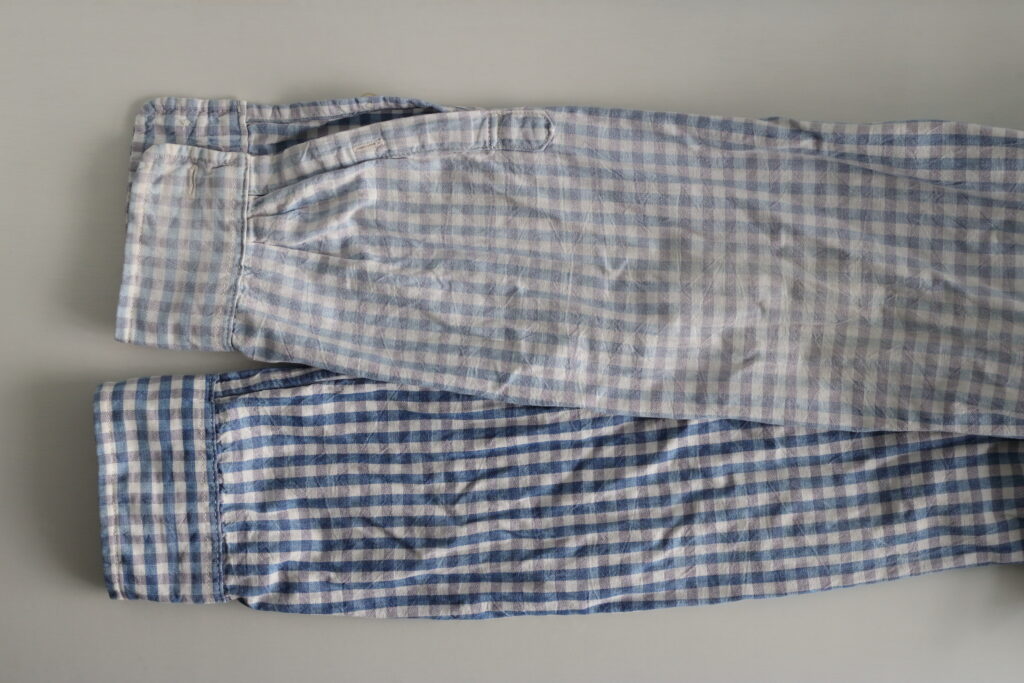
The four failure points, in the order most shirts reach them.
Shirts almost never fail all over at once. They fail in four specific places, in a fairly predictable order, and the rest of the garment is usually fine when the first of those four gives out. Knowing where to look changes what you do about it, because three of the four are preventable with about a minute of attention a week.
1. The Collar Fold
The fold line at the top of the collar takes more abrasion than any other part of a shirt. It rubs against the neck all day, absorbs whatever is on the skin, and gets pressed flat along exactly the same line every time the shirt is ironed or folded. Fraying starts at the fold and works outwards.
Two things slow it down. Wash the collar area before it looks dirty rather than after, because the grit that does the cutting is invisible for a while before it is visible. And hang shirts on a hanger with the top button closed instead of folding them, so the fold line is not being set in the same place between wears.
2. The Cuff Edge
On a woven shirt the cuff edge is second. It drags across desks, keyboards, car doors, and the inside of jacket sleeves, and the wear shows as a thin line along the outer edge before it becomes a fray. Rolling sleeves is not the enemy here, though rolling them the same way every time is, because a hard crease at the same point breaks the fibers faster than the rubbing does.
3. The Underarm
The underarm is where chemistry does the damage rather than friction. Aluminum salts in most antiperspirants react with sweat and with the fabric, and over time they stiffen it, then discolor it, then weaken it. The yellowing on the inside of an old white shirt is that reaction, not dirt, which is why scrubbing does very little.
The fix is timing. Let antiperspirant dry fully before dressing, wash the shirt after each wear rather than hanging it up for a second day, and use cool water, since hot water sets the reaction into the fiber. On a knit polo this matters more, because the loop structure holds residue deeper than a flat weave does.
4. The Button Threads
Buttons come off long before the fabric around them wears out, and they almost always come off because the thread shank was tied short at the factory. Run a finger under each button occasionally. If one has any play in it, resew it before it goes rather than after, since a lost button in a washing machine tends to take a small piece of fabric with it.
This is also the one worth checking on arrival. A button with a loose shank on day one is a manufacturing detail, not wear, and the Return & Refund Policy covers it as a defect for 30 days.
What This Means for the Wash
Almost all of the above points the same direction. Cool water, inside out for anything knitted, a gentle cycle, and out of the machine promptly. Skip the dryer entirely: heat is what shrinks a collar interlining unevenly and gives you a collar that ripples afterwards. Hang the shirt damp and most of the creases fall out on their own.
If something arrives and one of these four points looks wrong from the start, that is not something to live with. Common questions about condition and sizing are answered on the FAQs page.
Thank you for shopping with us, and for giving a good shirt a long rotation.